

How to Choose the Right CNC Machine Tool for Your Factory
share
Modern factories rely on Computer Numerical Control (CNC) machine tools as the foundation of precise and scalable production. For factory owners, the challenge is not just purchasing a machine but selecting one that perfectly aligns with production requirements, material demands, and long-term growth plans.
The right CNC machine tool for your factory will increase throughput and improve product consistency, but the wrong fit risks bottlenecks, quality issues, and wasted investment.
This guide explains the essential factors to consider in CNC machining equipment, combining EEA’s expert insights with industry standards to help you make an informed decision.
Understanding Your Factory’s Core Requirements
The first step when you choose a CNC machine tool for production is to conduct a detailed assessment of your specific needs. A clear understanding of your operational requirements will prevent overinvestment in oversized equipment or, conversely, the limitations of an underperforming machine.
Operational needs to assess before investing:
- Products Manufactured: The complexity of your parts dictates the required precision. Intricate aerospace components with complex geometries require multi-axis machines with higher precision capabilities than those used for general metal parts in automotive or industrial applications.
- Materials Used: Different materials behave differently under stress. Aluminum is known for its machinability and heat dissipation, and tough materials like stainless steel require more robust tooling and higher spindle torque to manage greater cutting forces.
- Tolerance Levels: Standard CNC Machines typically achieve tolerances of ±0.13 mm, which is adequate for many applications. High-precision sectors require models that can deliver tighter tolerances (achieved through features like thermal compensation systems and rigid machine beds).
- Production Volume: Your output will determine the optimal level of automation. Smaller, custom runs benefit from versatile CNC milling machines or lathes, while high-volume output demands specialized multi-axis machining centers to maximize uptime.
Aligning these requirements with machine specifications ensures that your investment directly supports operational goals.
Key Factors When Choosing CNC Machinery
Once your core needs are defined, you can evaluate specific machine characteristics. A thorough analysis of the following factors will help you select the ideal CNC machine for your manufacturing needs.
1. Precision & Tolerance
In competitive manufacturing, precision is what separates a qualified supplier from a subpar one. This precision is directly tied to the tolerances your CNC machine can achieve.
- Standard Tolerance Range: ±0.13 mm is suitable for most general manufacturing and fabrication needs.
- High-Precision Applications: Tolerances up to ±0.0025 mm are essential in demanding sectors like aerospace and medical devices.
- Cost and Cycle Time Impact: Achieving higher precision comes at a cost. It increases tooling wear, extends machining cycle times, and requires a higher initial investment in the machine itself.
2. Power & Infrastructure Planning
The power requirements of CNC machines vary significantly based on machine size and complexity. Before purchasing, factory owners should evaluate whether their facility can handle the machine’s electrical and environmental requirements.
Most industrial CNC systems operate on three-phase power. Smaller machines may run on a 220V single-phase supply with 30-40 amps, while heavy-duty CNC mills require a higher capacity at a 380-480V supply.
Clean and stable power within a ±10% voltage range is essential for consistent performance. Voltage sags can affect spindle speed and servo motor accuracy, directly impacting part quality.
Your infrastructure checklist should cover:
- Power supply capacity and amperage (measured in kVA)
- Operating modes (continuous vs intermittent use)
- Ventilation and workspace clearance for heat dissipation and safe operation.
- Backup power systems to prevent downtime during outages.
3. Production Volume & Scalability
The right CNC machine tool for production must match your intended output. Investing in an oversized system for small-batch work ties up capital, while a machine suited for prototyping will create a bottleneck in a mass-production environment.
Volume-based selection guidelines:
- Low volume (under 1000 units): Basic CNC lathes and 3-axis milling machines provide flexibility for custom parts and prototyping.
- Medium volume (1000-10,000 units): Multi-axis machining centers with automated tool changers balance efficiency and accuracy.
- High volume (over 10,000 units): Horizontal machining centers with integrated robotics maximize output while minimizing operator intervention.
Planning for scalability is equally important. Machines with modular designs or clear upgrade paths allow your factory to scale capacity without the need to replace entire systems.
4. Budgeting, ROI, and Hidden Costs
A CNC machine is a major capital investment, but the purchase price is only the beginning. A comprehensive budget should account for the total cost of ownership to accurately project the return on investment (ROI).
Return on Investment (ROI) can be estimated using the payback period formula:
Payback Period (years) = Total Cost of Investment ÷ Annual Net Profit
Hidden costs to consider include:
- Tooling: High-quality carbide tooling and fixtures add extra costs to the initial setup cost.
- Software and training: Essential for programming efficiency and operator confidence.
- Energy consumption: Energy consumed (kWh) = Input power rating (kW) × Operating time (hours).
- Annual maintenance: Preventive maintenance is crucial for ensuring long-term reliability. Prices depend on usage and complexity.
5. Supplier Support & Long-Term Reliability
Even the most advanced CNC machine tool cannot deliver lasting value without strong supplier support. A reliable service infrastructure ensures that equipment remains operational, safe, and productive throughout its entire lifecycle.
When evaluating suppliers, consider the availability of:
- Installation and commissioning services to ensure a smooth setup
- Operator training programs to maximize machine capability
- Spare parts inventory for rapid replacement and reduced downtime
- On-site technical support for troubleshooting and preventive maintenance
EEA distinguishes itself in this area with one of Egypt’s most comprehensive after-sales service operations. Our service department includes 20 engineers, 40 highly trained technicians, and 14 fully equipped maintenance vehicles, all dedicated to supporting customer facilities. Routine maintenance contracts with monthly visits further strengthen uptime and equipment reliability.
EEA’s CNC Solutions: A Diverse Portfolio for Modern Manufacturing
As the exclusive distributor for global manufacturers HACO, Pedrazzoli, and Serdi in Egypt, EEA offers a comprehensive portfolio of CNC machine tools tailored to meet the diverse needs of modern manufacturing.
Single Point CNC Valve Seat Machine
This advanced machine from Serdi represents over a decade of expertise in single-point technology. The triple air cushion centering system delivers unparalleled accuracy, and its versatile design handles cylinder heads from small motorcycles to large stationary engines, making it ideal for small to medium-volume production.
CNC Plasma Cutting Machine
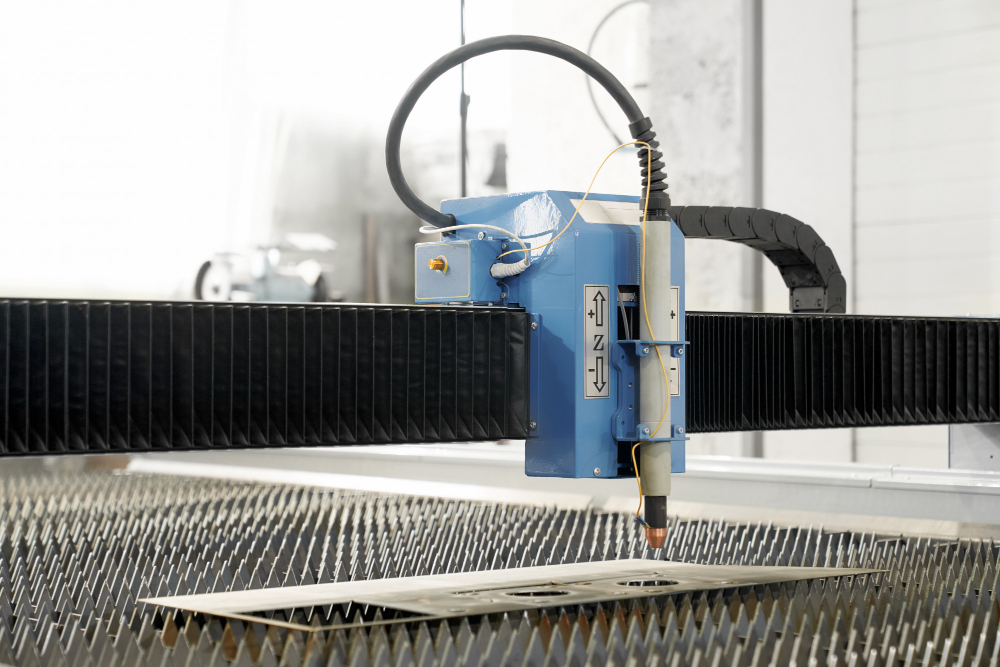
This system utilizes an accelerated jet of hot plasma to cut through any electrically conductive material with speed and precision. An excellent solution for producing clean, sharp edges on sheet metal applications across various thicknesses.
Press Brake (Hydraulic & CNC)
This hydraulic CNC Press Brake combines high-tonnage force with precise CNC-controlled backgauges to effortlessly bend and shape sheet and plate metal. It offers unparalleled accuracy and consistency for all high-accuracy metal fabrication tasks
CNC Laser Cutting Machine
This machine emits a high-powered laser beam, cleanly cutting intricate designs on materials like steel with exceptional precision. The technology ensures clean, burr-free edges and a minimal heat-affected zone to preserve material integrity.
CNC Tube Bending Machine
As a specialized forming machine, its purpose is to create consistent, precise bends in tubes and pipes. CNC control ensures exact bend angles, enabling the production of complex, multi-plane geometries with perfect repeatability.
CNC Lathe Machine
This precision tool rotates a workpiece on a horizontal axis while a fixed cutting tool shapes it. CNC lathes excel at turning, facing, threading, and drilling operations, making them ideal for producing shafts, rods, and other cylindrical components with unparalleled accuracy.
CNC Milling Machine
Offering versatile material removal with rotary cutters, these machines can drill and cut a wide range of materials. They are capable of producing highly complex geometries with exceptional precision.
Choosing the right CNC machine tool for your factory begins with understanding your requirements and ends with selecting a partner who can support you every step of the way.
Contact EEA today to discuss the right CNC solution for your production needs.