
EEA Pumps: Supporting the Grand Egyptian Museum Walkway
share
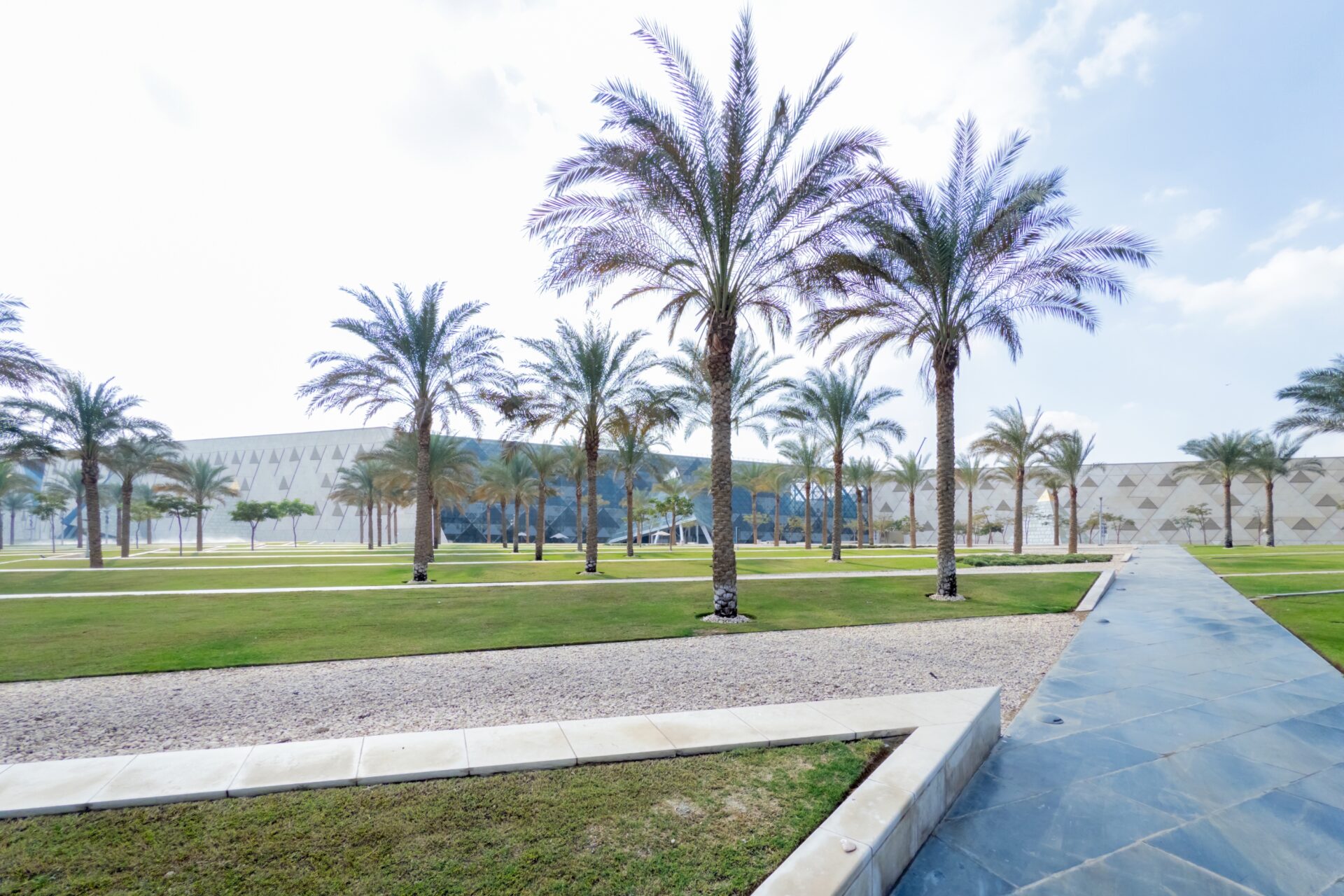
In addition to serving as a connector between two historic landmarks, the Grand Egyptian Museum’s Pyramids Walkway is a meticulously designed public space that combines water, greenery, and engineering precision.
At Egyptian Engineering Agencies (EEA), we are proud to contribute to this iconic project by supplying pump systems through our exclusive partnerships with DP Pumps and HOMA, which bring the walkway’s water features and irrigation network to life.
DP Pumps DPH(S)I: High-Efficiency for Pressurized Irrigation
To power the Walkway’s extensive irrigation zones, EEA supplied the DPH(S)I horizontal multi-stage centrifugal pump from DP Pumps. This model was selected for its efficiency, durability, and ability to maintain steady pressure in long distribution lines, which is critical for consistent coverage in open, landscaped areas.
Built from AISI 304 or 316 stainless steel, the DPH(S)I offers excellent resistance to corrosion, making it ideal for outdoor use in Egypt’s climate. Its compact footprint and high hydraulic performance (up to 27 m³/h) allow for easy integration into pump stations without compromising output.
Key technical advantages of the DPH(S)I pump:
- Low NPSHr design prevents cavitation and supports smooth operation
- Closed-coupled motor design reduces energy loss and simplifies installation.
- Multi-stage construction allows the pump to deliver high pressure while maintaining energy efficiency.
HOMA GRP Series: Grinder Pumps for Water Reuse Applications
In several parts of the GEM Pyramids Walkway, treated or reused water is utilized for irrigation: an approach that supports sustainability but requires equipment capable of handling suspended solids. For this purpose, EEA supplied HOMA GRP Series grinder pumps, designed specifically for tough conditions where clogging could easily disrupt operations.
The GRP Series is known for its robust grinding mechanism. Its hardened cutter system shreds fibrous and solid materials before they enter the pump chamber, significantly reducing the risk of blockage in the pipelines downstream.
Key features of the GRP Homa pump:
- The external cutting system, made from wear-resistant stainless steel (HRC 55), ensures reliable solids reduction.
- Compact, submersible design simplifies installation in confined pump chambers.
- Optional explosion-proof motors and integrated moisture/temperature sensors provide added protection and monitoring.
These pumps play a quiet but critical role in keeping the system clean and operational, especially in zones where the water source is less predictable. They reflect EEA’s commitment to integrating reliable pump systems that minimize maintenance and support continuous operation.
HOMA OC Series: Chopper Pumps for Maintenance and Waste Handling
Beyond irrigation and water features, the GEM Walkway also required a solution for handling wastewater and sludge in service pits and utility areas. For these needs, EEA supplied HOMA OC Series chopper pumps, a heavy-duty option engineered to process challenging solids without clogging or system failures.
The OC Series features a dynamic chopping system that macerates coarse materials before they pass through the pump. This makes it ideal for greywater zones or underground chambers where accumulated waste must be cleared efficiently.
Why the OC Series was the right fit:
- High-chrome steel cutting system with hardened edges delivers reliable solids handling in harsh conditions.
- High head capabilities (up to 80 m) make it suitable for deeper lift or transfer requirements.
- The submersible configuration allows for easy integration into sump pits with minimal civil engineering adjustments.
For the GEM Pyramids Walkway project, these pumps ensure that maintenance operations—often invisible to the public—are carried out smoothly, supporting the broader goal of long-term reliability across the entire water infrastructure.
Integrated Pump Solutions for a Landmark Project
Each pump model supplied by EEA was selected to serve a specific role within the GEM Pyramids Walkway—whether powering irrigation lines, supporting treated water reuse, or managing maintenance wastewater. Together, these systems form a complete and coordinated solution that ensures the water infrastructure runs efficiently and reliably year-round.
EEA’s Approach to Reliable Water Infrastructure
- Performance under pressure: Multi-stage centrifugal design from DP Pumps provides consistent irrigation coverage, even across large landscaped zones.
- Blockage-free operation: HOMA’s grinder and chopper technologies handle solids, sludge, and wastewater without interrupting service.
- Corrosion-resistant durability: Stainless steel construction protects pump components against Egypt’s heat, humidity, and variable water quality.
- Efficient maintenance: Submersible configurations and sensor integration simplify upkeep while minimizing manual intervention.
By tailoring the equipment mix to the Grand Egyptian Museum’s technical and environmental conditions, EEA delivered a dependable foundation for one of Egypt’s most iconic public landmarks.
Powering Infrastructure with Purpose
EEA’s role in the Grand Egyptian Museum Walkway reflects our ongoing commitment to delivering infrastructure water solutions that are not only technically sound but also built to last. By integrating pumps from trusted global suppliers, such as DP Pumps and HOMA, we supported a project that combines national heritage with modern engineering.
To explore how EEA can support your next infrastructure or water management project, get in touch with our team.