

Enhancing Manufacturing Capabilities with Hydraulic Presses from EEA
share
Egypt’s manufacturing sector is experiencing rapid growth. As the country works toward nearly doubling its industrial output by 2027, factories are looking for machines that offer reliability and precision at scale. Among the most in-demand tools are hydraulic presses, used in various industries, including car manufacturing, construction materials, and pharmaceutical production, where accuracy and steady force are crucial.
For over 80 years, Egyptian Engineering Agencies (EEA) has helped local manufacturers stay competitive by supplying them with trusted hydraulic press solutions from global leaders, including HACO, Sogema, and AC Hydraulics. In this blog, we’ll look at how hydraulic presses are supporting Egypt’s industrial ambitions and where they’re making the biggest impact.
How Do Hydraulic Presses Operate?
Hydraulic presses use pressurized fluid to apply force, a principle first explained by Blaise Pascal. A typical hydraulic press consists of a cylinder, piston, pump, control valves, and a heavy steel frame designed to withstand high pressure without distortion.
Applications of The Hydraulic Press in Egyptian Industries
I. Metal Fabrication & Forming
Hydraulic presses in Egypt play a crucial role in the metalworking industry. Because they apply steady force from start to finish, they’re used in processes where accuracy and repeatability are priorities like deep drawing, stamping, punching, and forging. Factories rely on them to shape parts for everything from manufacturing machinery to export-ready products.
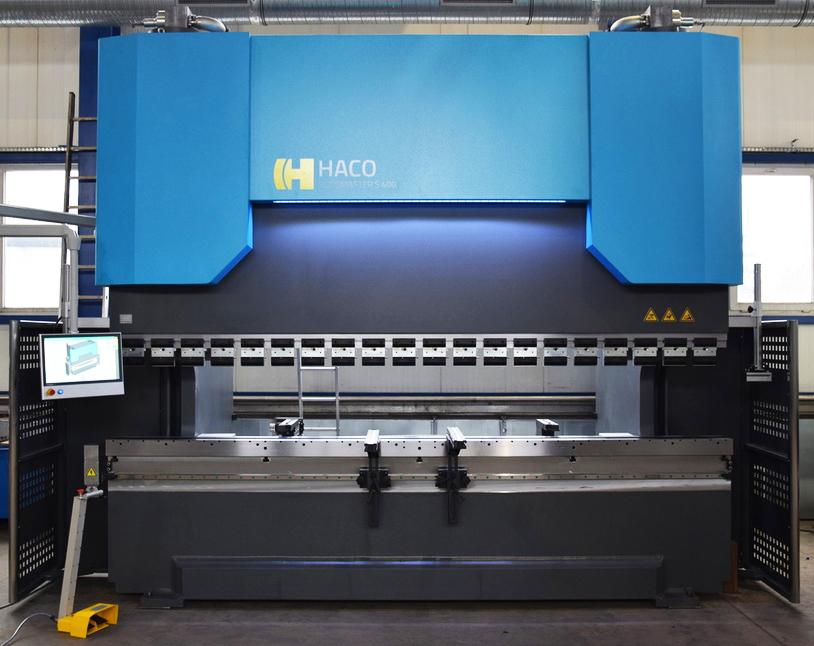
Advanced press models like the HACO PressMaster can handle complex shapes and large batches with ease. And when combined with tools like the Turret Punch Press, manufacturers can work faster while still meeting tight design requirements.
II. Automotive Industry
Egyptian manufacturers utilize hydraulic presses to produce car doors, hoods, fenders, and other critical components that require complex shapes and tight tolerances.
Modern hydraulic press machines are also designed to handle lightweight materials, such as aluminum and high-strength steel, which helps improve fuel efficiency and reduce the vehicle’s weight.
These press machines also support rail manufacturing. Sogema’s Bogie Assembly Press helps assemble critical transport components, and their Wheel Presses support the precise maintenance of wheelsets in rail systems.
III. Construction and Building Materials
There’s growing demand for hydraulic presses in producing construction materials like cement fiber boards and calcium silicate panels. Industrial presses apply the high compressive force needed to shape and compact these materials with speed and consistency, ensuring the output is both strong and durable.
Machines like the 100T Classic Press provide the power and flexibility that large factories require to meet high demand and stringent quality standards.
IV. Pharmaceutical and Chemical Industries
Hydraulic presses are used in tablet compression and powder compaction. These applications require precise force control and clean operating conditions. Modern hydraulic systems are designed to support this, with features that reduce contamination risk and maintain consistency across batches.
Benefits of Hydraulic Presses in Egyptian Manufacturing
1. Superior Force and Precision Control
Unlike most mechanical presses, hydraulic machines apply full force throughout the entire stroke, not just at the end. This consistent pressure ensures that materials are shaped evenly at every point of the stroke, which is essential for maintaining accuracy in parts with tight design requirements.
2. Energy and Cost Savings
Hydraulic presses generate pressure only when required and pause between cycles. This intermittent operation helps in reducing unnecessary energy use during setup or less frequent tasks.
Many models also offer options that can maintain force without keeping the pump active, allowing workshops to manage energy consumption more efficiently.
3. Works Across Multiple Industries
Another reason hydraulic presses are used in numerous sectors is their ability to handle a wide range of materials and production needs without requiring frequent retooling.
Models like the 40T FlexiPress and the 100-ton hydraulic press demonstrate this flexibility. The 40T is ideal for pressing bearings, compacting powders, or shaping aluminum parts -tasks that don’t require major die changes between runs. The 100T features adjustable stroke settings and supports fast die swaps, reducing the need for full retooling.
4. Built-In Safety
Operator safety is integral to modern press design. Features such as two-hand controls, light curtains, interlocking guards, and emergency stop systems protect workers and help Egyptian manufacturers comply with international safety standards.
5. Long-Term Reliability, Lower Maintenance
Fewer moving parts and robust steel frames result in reduced wear and maintenance requirements. That means fewer repairs, better uptime, and lower overall costs over the equipment’s life.
What to Look for When Selecting a Hydraulic Press Machine
Choosing the right hydraulic press depends on the operational needs and long-term performance goals of the manufacturer. Here are a few key factors to consider:
- Tonnage Capacity: Assess the force required for your applications, whether forming lightweight materials or compacting dense components. Models such as 40-ton and 100-ton presses serve different production scales and must align with material properties and output volumes.
- Type and Configuration: Consider the press frame design. C-frame presses offer accessibility for smaller parts, while H-frame systems provide uniform force distribution for larger components.
- Precision and Control Systems: Modern presses often come equipped with digital controls that allow you to adjust the speed, pressure, and stroke length. This helps maintain consistent results when precise measurements are required.
- Safety Features: Make sure the machine includes advanced protection features (e.g., two-hand controls, safety light curtains, interlocking guards). These features help protect workers and meet mandatory global safety standards.
- Energy Efficiency and Sustainability: Variable frequency drives and eco-friendly hydraulic fluids contribute to reduced operational costs and environmental impact.
- After-Sales Support: Partnering with suppliers that provide installation, training, and maintenance services is essential for maximizing equipment uptime and achieving long-term reliability.
EEA: Supporting the Future of Egyptian Industries
Choosing the right equipment for your manufacturing facility is part of the equation. Just as important is having a trusted partner to support you long after installation day.
For decades, Egyptian Engineering Agencies has helped manufacturers and industrial facilities by supplying high-performance machinery from globally recognized brands, backed by one of the most capable service teams in the country.
Our after-sales support is a full-scale operation. With 20 engineers, 40 trained technicians, and 14 fully equipped maintenance vehicles, our team is built to respond quickly and effectively. From installation and preventive maintenance to emergency repairs and on-site training, we support multiple industries at every stage of their equipment’s lifecycle.
Our maintenance contracts include monthly service visits that continue even after the warranty ends. This helps prevent unplanned downtime, extend your equipment’s lifespan, and protect your investment over the long term.
We also provide in-house training programs for every piece of equipment we supply, ensuring manufacturers get the most out of their equipment from day one.
Whether you’re upgrading a single machine or building an entire facility, EEA is here to help your operation run smoothly and stay that way.
Contact us today to explore hydraulic press solutions specifically designed for your factory.