

Upgrading Your Automotive Workshop: Choosing Between Hydraulic vs. Electric Lifts
share
Your workshop floor is where your revenue happens, and the speed at which you can cycle vehicles through that space defines your profitability. Whether you’re planning a complete facility overhaul or replacing a single aging unit, the choice of vehicle-lifting technology will dictate your team’s efficiency for the next decade.
Hydraulic lifts and electric lifts represent the two primary paths for a workshop upgrade. Each uses a distinct method to raise vehicles, and each is suited to specific operating conditions found in Egyptian service centers.
In this blog, we will walk through the mechanical differences between these systems, compare their performance in real-world scenarios, and examine which vehicle lift options fit best with different automotive business models.
How Hydraulic Lifts Work in Automotive Workshops
Hydraulic lifts rely on fluid mechanics to generate a massive lifting force. The system operates through a reliable chain of components designed for heavy repetition:
- Electric Motor & Pump: An electric motor drives a hydraulic pump, typically submerged in oil to reduce noise and heat.
- Fluid Transfer: The pump pushes high-viscosity hydraulic oil from a reservoir into the lift cylinders.
- Force Multiplication: The pressure builds inside the cylinder, pushing against the piston surface. This force extends the piston and raises the lift arms or runways.
The popularity of hydraulic lifts stems from their simplicity and speed. Because the system relies on fluid pressure, there are fewer moving metal parts in contact with one another compared to mechanical systems. This design inherently reduces friction and wear over time.
How Electric Lifts Operate and Where They Fit Best
Electric lifts use direct mechanical power instead of fluid pressure. An electric motor turns a high-strength lead screw suspended vertically within the column. A load-bearing nut attached to the lift carriage travels up and down these threads to raise or lower the vehicle.
Benefits of electric lifts:
- Self-Locking Safety: The friction between the screw threads and the lifting nut holds the carriage in place naturally. If the power cuts out, the lift stops instantly and holds its position without needing a separate mechanical latch to engage.
- Clean Environment: Because the system contains no hydraulic oil, electric lifts eliminate the risk of fluid leaks. This makes them the preferred choice for showrooms, clean manufacturing labs, and workshops with strict environmental controls.
- Powered Descent: The motor must run to drive the lift down against friction, meaning these units consume electricity during both the lifting and lowering cycles.
These features make electric lifts highly suitable for facilities that service lighter passenger cars or electric vehicles (EVs), where clean operation and precise positioning for battery removal are more critical than raw lifting speed.
Comparing Performance: Hydraulic vs. Electric Lifts
1. Lifting Speed and Cycle Times
Hydraulic lifts generally outperform their electric counterparts. A standard high-quality hydraulic 2-post lift can reach full height in 30 to 45 seconds. Electro-mechanical lifts typically need 60 seconds or more to reach full height due to the friction limitations of the screw design. These extra seconds per job add up to hours of lost productivity in a high-volume quick-service bay.
2. Maintenance and Durability
- Hydraulic Lifts: The cylinder protects the critical components from dust and grit. Routine maintenance mainly involves visual inspections and checking cables or chains. The hydraulic oil itself acts as a lubricant and reduces internal wear.
- Electric Lifts: The main lead screw is exposed in many designs and requires regular greasing and lubrication. If the load nut wears out, it must be replaced through a process that is usually more expensive and labor-intensive than replacing a hydraulic seal.
3. Safety Mechanisms
- Hydraulic lifts employ a dual-safety system: the hydraulic pressure holding the weight and mechanical safety latches (locks) that engage at specific intervals. If a hose bursts, flow-control valves immediately block the flow to prevent the fluid from descending.
- Electric lifts rely on the self-locking nature of the screw thread. Modern electric systems also include electronic monitoring to detect nut wear, shutting down the machine if the components are no longer within tolerance.
4. Noise Levels
Hydraulic lifts are generally quieter because the motor and pump are submerged in oil or enclosed in a sound-dampened power unit. Electric lifts generate mechanical noise as the metal nut travels along the screw, which can be louder depending on the lubrication status and age of the unit.
Selecting the Right Car Lifts for Your Workflow
As a trusted provider of Automotive services and machinery in Egypt, EEA offers a wide portfolio of vehicle lifts tailored to various vehicle types and service needs. We are the exclusive distributor for premium European manufacturers: AC Hydraulics, Nussbaum, and Stertil-Koni:
For General Repair and Maintenance
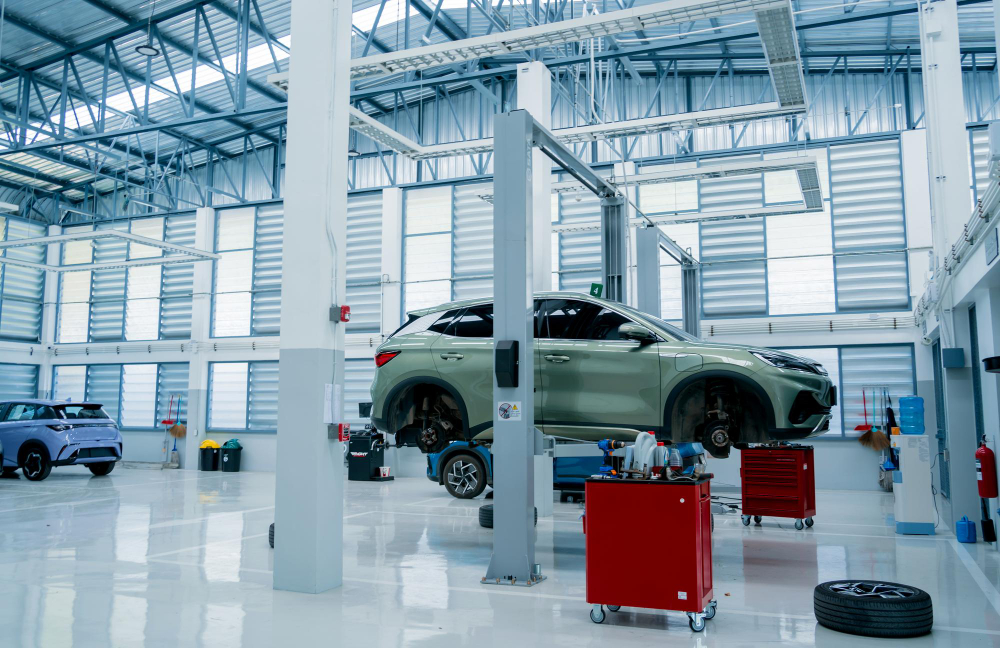
The 2-post lift remains the standard for general repair. It allows full access to the wheels and underbody.
- The Hydraulic Choice: The 2-post lift FreedomLift by Nussbaum is a prime example of hydraulic efficiency. Its arm design allows it to pick up everything from a Smart car to a long-wheelbase van without moving the vehicle, making it highly versatile for mixed fleets.
- The Electric Choice: For workshops that prefer mechanical locking and fine precision, electro-mechanical 2-post options are available, though they require a stricter maintenance schedule.
For Alignment and Inspection
When you need a stable platform for wheel alignment or quick oil changes, a runway-style lift is superior.
- Heavy Duty Solutions: The 4-post lift provides exceptional stability. For commercial vehicles, the 4-post lift Stertil-Koni offers massive capacity. These are often hydraulic units designed to handle tens of tons with ease.
- Space Saving Solutions: If you have limited floor space, a scissor lift or a scissor lift (double scissor) is ideal. These retract flush with the floor or sit low profile, keeping your shop looking open and clean.
For Tire Bays and Quick Service
Tire shops require speed above all else. A mid-rise scissor lift is the perfect tool here. It lifts the car just enough to work on the wheels and brakes comfortably, lifting by the chassis so the suspension hangs free. It is faster to set up than a 2-post lift and takes up less room.
Essential Support Equipment for a Complete Workshop
Lifting Components Safely
Once the vehicle is elevated, specialized equipment is needed to remove heavy components.
- Engine Work: A hydraulic crane is required to safely pullengines out of the bay
- Drivetrain Work: A transmission jack is vital. It allows a technician to support the gearbox or differential while the car is on the lift, preventing injury and component damage.
- Wheel Service on Platform Lifts: If you are using a 4-post lift for wheel work, you will need a rolling jack. This slides along the runways and lifts the vehicle wheels off the platform.
Pressing and Floor Operations
Not all work happens on the primary lift.
- Component Service: Pressing bearings, bushings, and ball joints requires immense force. A hydraulic press is a mandatory fixture in any professional shop. For heavy-duty applications, the 100t classic press provides 100 tons of force, while the 40t flexi press offers versatility for smaller tasks.
- Quick Access: For quick lifting on the shop floor without a bay, a high-quality floor jack is indispensable for simple tasks like changing a flat tire or inspecting brakes outside the main bays.
Partner with EEA for Your Workshop Upgrade
At EEA, we help you navigate these vehicle lift options. We assess your space constraints, vehicle mix, and service goals to recommend the exact equipment that maximizes your ROI. We supply premium European brands like Nussbaum, Stertil-Koni, and AC Hydraulic because we believe your workshop deserves equipment that lasts.
Whether you need the flexibility of mobile columns or the raw power of heavy-duty hydraulic lifts, our team supports you from selection to installation and beyond.
Ready to upgrade your facility with the world’s best lifting technology?